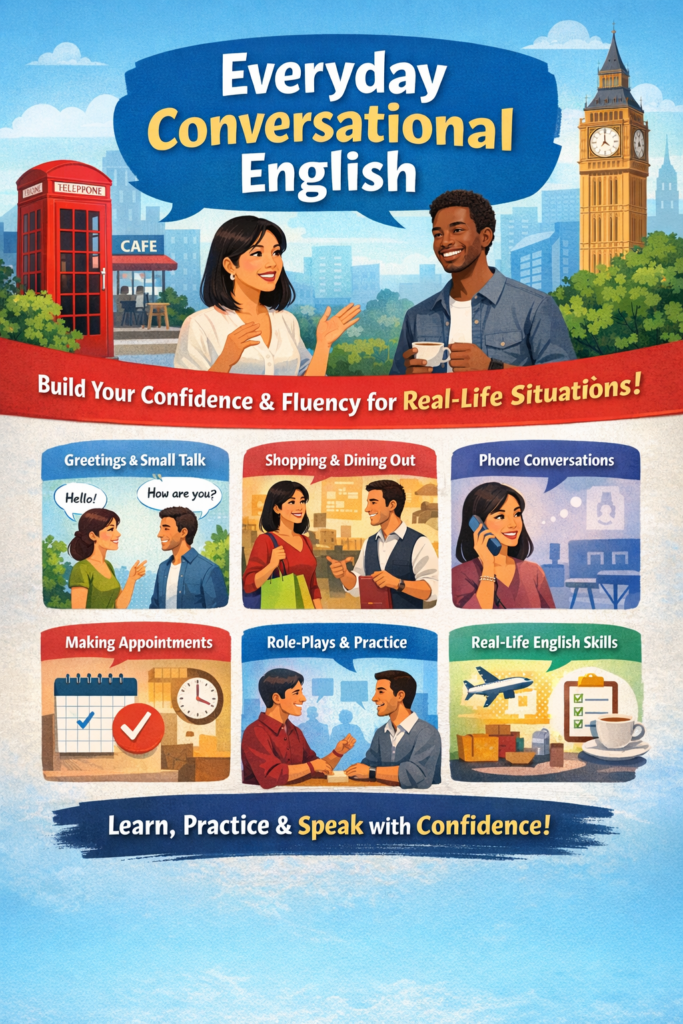

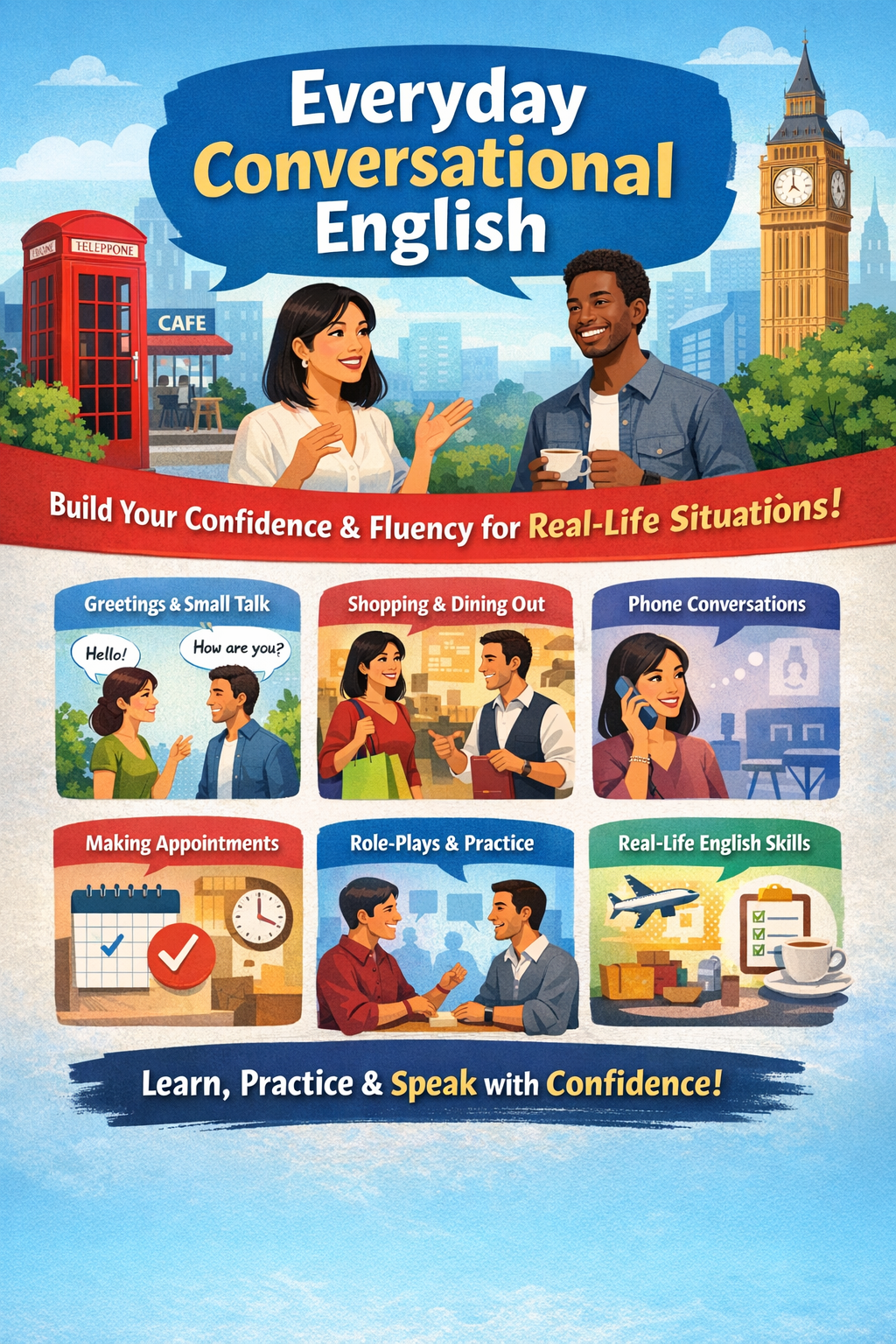
This course is designed for non-native English speakers who want to improve their conversational skills for everyday situations. Through interactive and practical lessons, learners will participate in real-life dialogues covering essential topics such as greetings, small talk, shopping, and dining at restaurants. The course also focuses on improving phone communication skills and teaching learners how to make and manage appointments effectively. By the end of the course, participants will gain confidence, fluency, and the practical language tools needed for successful real-world interactions.
Course Objectives
By the end of this course, learners will be able to:
- Communicate confidently in common daily situations
- Use appropriate greetings and small talk in social settings
- Interact effectively while shopping or dining out
- Handle phone conversations with clarity and confidence
- Make, change, and confirm appointments politely
Target Audience
- Beginner to lower-intermediate non-native English speakers
- Adults or young adults preparing for daily life, travel, or work in English-speaking environments
Course Duration
- 8–10 weeks
- 2–3 hours per week
Course Structure & Modules
Module 1: Basic Communication & Greetings
- Introducing yourself
- Formal vs. informal greetings
- Polite expressions and body language
Module 2: Small Talk & Social Conversations
- Talking about weather, hobbies, and daily routines
- Keeping a conversation going
- Cultural tips for social interactions
Module 3: Shopping English
- Asking for prices and sizes
- Making requests and comparisons
- Handling payments and returns
Module 4: Restaurant & Café Conversations
- Ordering food and drinks
- Asking for recommendations
- Handling problems politely
Module 5: Phone Conversations
- Answering and making phone calls
- Leaving and taking messages
- Common phone expressions
Module 6: Making Appointments
- Scheduling appointments
- Confirming, rescheduling, or canceling
- Professional vs. casual situations
Module 7: Review & Role-Play Practice
- Real-life simulations
- Group and pair activities
- Confidence-building exercises
Teaching Methods
- Interactive role-plays
- Listening and speaking practice
- Group discussions
- Real-life scenario simulations
Assessment
- Participation and speaking activities
- Practical role-play evaluations
- Final conversational performance task